Wall-Mounted X-Ray Bucky Stand: Installation & Buying Guide
Author:
A wall-mounted x-ray bucky stand is one of the most space-efficient ways to equip a radiology room. Instead of taking up floor space like a mobile stand, it attaches directly to the wall and keeps the cassette holder, grid and patient position in one tidy vertical line. For clinics with small examination rooms — or for departments that want a dedicated chest X-ray station — a wall bucky x ray is often the smartest choice.
What is a wall-mounted x-ray bucky stand?
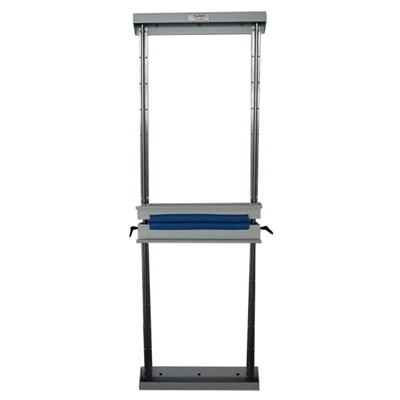
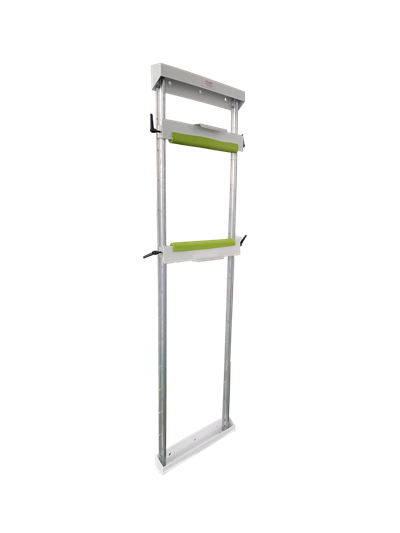
A wall bucky x ray is a vertical bucky stand fixed to the wall. It consists of a frame, a sliding rod, a film clip, a ruler, and upper and lower supporting plates. The upper supporting plate carries less than 100 kg, and the film clip moves up and down so the cassette can be aligned with the patient’s chest or abdomen. Most models use a single-leg design with internal balance and mechanical locking, and the film box opens 180° for easy cassette loading.
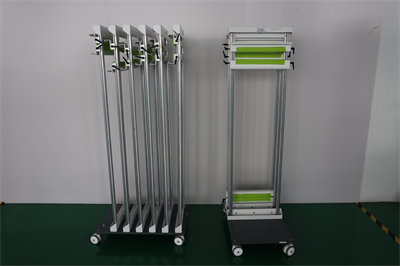
Standard specifications for a Newheek wall bucky x ray:
Film box size: 480 × 550 mm (accepts 14″ × 17″ and 17″ × 17″ film, CR IP boards and flat panel detectors)
Film box lifting range: 300–1600 mm
Grid: 10:1 ratio, 103 lines/inch, 180 cm focal length (imported, removable)
Loading: front or side loading
Mounting: wall-mounted, single column
How to install a wall-mounted bucky stand
Choose a solid wall that can support the stand and the patient’s weight.
Mark the position: the cassette center must align with the X-ray tube, normally at a source-to-image distance of 180 cm.
Drill the mounting holes and fix the frame with expansion screws (typically four M8 screws).
Level the frame with the included ruler and check that the film clip moves smoothly up and down.
Test with a cassette: insert, open the box 180°, and confirm the grid sits flat.
If you are not sure about the wall structure, ask the supplier for a mounting drawing. Newheek includes installation instructions with every wall-mounted bucky stand.
Wall-mounted vs mobile bucky stand
| Feature | Wall-mounted | Mobile (movable) |
| Floor space | None | Takes up floor space |
| Room flexibility | Fixed position | Can move between rooms |
| Installation | Requires drilling/leveling | No installation needed |
| Best for | Dedicated chest X-ray room | Multi-purpose rooms, emergency dept |
Buying guide: what to check
1.Film size — make sure the stand accepts the cassette size you use (14″ × 17″ is the standard; 17″ × 17″ if you use flat panel detectors).
2.Grid quality — a 10:1, 103 lines/inch grid with 180 cm focal length is the medical standard.
3.Height range — a 300–1600 mm range covers standing and seated patients.
4.Build quality — check the column material (aluminum alloy is common) and the locking mechanism.
5.Certification — for hospital procurement, ask for ISO 13485 and CE certificates.
Frequently asked questions
Q: Can a wall-mounted bucky stand be used with a DR system?
Yes. The cassette holder can be replaced or adjusted to accept a flat panel detector, and the grid can be removed when working with digital detectors that do not need it.
Q: How much wall space do I need?
A typical wall bucky x ray needs about 600 mm of wall width and 1.8 m of vertical clearance.
Q: Does Newheek provide installation support?
Yes. Every order includes installation instructions, and our engineers can answer mounting questions by email at newheekaide@gmail.com. Factory-direct quotation within 24 hours.
Related: Wall-Mounted Bucky Stand X-Ray Features · Wall-Mount Dimensions · DR Bucky Stand
