Load Capacity Standards for Medical X-Ray Chest Stands: The Essential Procurement Guide
Author:
Introduction
In the modern healthcare industry, the medical X-ray chest stand (Bucky stand) is a critical component of diagnostic imaging systems. Its load-bearing standard directly impacts diagnostic accuracy and, more importantly, patient safety. This guide clarifies the actual engineering standards for chest stand load capacity and provides a practical checklist for procuring reliable equipment.
(Note: The “2kg” weight mentioned in some older texts refers to the weight of the film cassette or detector, not the structural load capacity required from the frame. Modern standards focus on the dynamic forces exerted by patients leaning against the stand.)
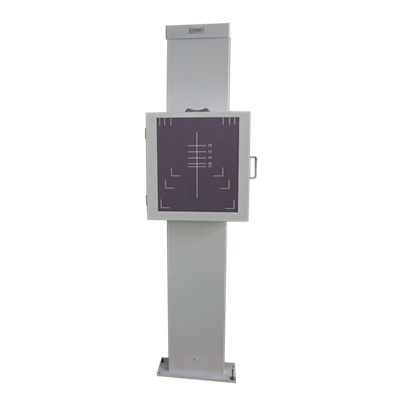
1. Understanding Load Capacity Standards
1. Material Integrity: The Foundation of Stability
A professional chest stand must be constructed from high-strength materials to ensure structural rigidity.
- High-Strength Aluminum Alloys: The industry standard for premium stands. They offer an excellent strength-to-weight ratio, resist corrosion, and minimize vibration.
- Carbon Steel: Often used in economy models, requiring a robust powder-coated finish to prevent rust in humid clinical environments.
2. Actual Load Capacity Requirements
Unlike the misconception that the stand only supports a 1.5kg–2kg cassette, the frame must withstand the dynamic pressure of a patient leaning against it.
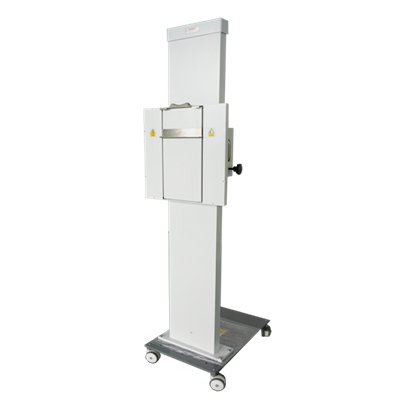
- Standard Clinical Load: Quality chest stands are engineered to withstand a static load of 135kg to 150kg. This ensures stability even when heavy or bariatric patients (up to 300+ lbs) use the equipment.
- Safety Factor: Reputable manufacturers design with a safety factor of 2:1 or higher, meaning a stand rated for 150kg can structurally withstand 300kg without permanent deformation.
3. Weight Distribution & Structural Rigidity
The stand must maintain perfect vertical alignment under pressure.
- Uniform Distribution: The base must be engineered to prevent “tipping” and the column must resist flexing. A high-quality stand will not visibly tilt or sway when a patient applies pressure.
- Base Design: Floor-mounted stands feature wide, heavy bases or require secure bolting to the floor/wall to ensure the center of gravity remains low and stable.
4. Safety Features
Safety is non-negotiable in medical procurement.
- Anti-Slip Surfaces: The footrests and base should have non-slip treads to prevent patient falls.
- Stable Support: The carriage locking mechanism must engage instantly and hold the detector tray firmly at any height, preventing sudden drops.
- Rounded Edges: All patient-contact surfaces should be smooth and rounded to prevent injury during positioning.
2. The Procurement Checklist: Selecting the Right Chest Stand

1. Define Clinical Load Requirements
Before purchasing, assess your patient demographics.
- Standard Care: A 135kg (300 lbs) capacity is sufficient for most community clinics.
- Bariatric/Tertiary Care: For hospitals serving a diverse population, select a stand with a 150kg–200kg (330–440 lbs) capacity to ensure long-term durability and safety.
2. Quality Inspection & Compliance
Verify the build quality and regulatory status.
- Regulatory Certification: Ensure the product has a valid Medical Device Registration Certificate (e.g., FDA 510k, CE Mark, NMPA).
- Build Quality: Check the smoothness of the vertical track. Manual adjustment should be smooth; electric adjustment should be steady without jerking.
3. Safety Mechanisms
Inspect the braking and locking systems.
- Electromagnetic Brakes: For electric models, ensure the brake engages immediately when power is cut.
- Mechanical Locks: For manual models, verify the reliability of the pin-lock or friction-brake system.
- Lead Protection: Confirm the presence of a lead curtain (≥0.5mmPb) to protect the patient’s lower body from scatter radiation.
4. Brand Reputation & After-Sales
- Reputation: Choose established brands known for imaging equipment. Check for references in similar-sized hospitals.
- Warranty: Insist on a warranty that specifically covers the motor (if electric), the vertical track, and the grid. A minimum of 3 years is recommended for the frame.
- Service: Ensure the supplier provides timely technical support and readily available spare parts (e.g., replacement casters, brake pads).
Summary
The load capacity of a medical X-ray chest stand is a critical safety parameter, not merely a measure of how much weight the shelf can hold. When procuring equipment, prioritize structural integrity, actual patient load capacity (135kg+), and certified safety features. By moving beyond outdated specifications and focusing on engineering quality, you ensure the purchase of a durable, safe, and clinically effective imaging solution.
