In-depth Analysis of the Load-bearing Capacity of Medical X-ray Chest Film Holders: Selection Logic and Clinical Safety Considerations
Author:
In the daily work of the radiology department, the chest X-ray table is a seemingly simple yet crucially important piece of equipment. It not only serves as the physical carrier of the detector, but also acts as the geometric reference point connecting the cathode ray tube, the patient, and the imaging chain. However, during the procurement and selection process, a parameter that is easily overlooked but extremely crucial is the load-bearing capacity. Insufficient load-bearing capacity can lead to equipment shaking and image blurring at the very least; at worst, it may cause the equipment to tip over and patients to fall, resulting in safety accidents. This article will systematically analyze this key parameter from four dimensions: the definition, influencing factors, selection logic, and clinical adaptation of the load-bearing capacity.
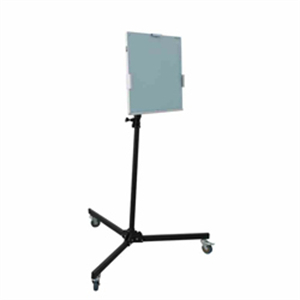
I. The connotation of load-bearing capacity: It is not merely “how much weight can it bear
The load-bearing capacity of the chest X-ray stand is usually indicated in kilograms. Common grades include 500 kilograms, 750 kilograms, and 1000 kilograms, etc. However, this figure does not simply mean “it won’t collapse if you put such a heavy object on it”. Instead, it takes into account three aspects: static load, dynamic load, and safety redundancy.
Static load refers to the maximum weight that the X-ray film holder can withstand when in a stationary state, including the weight of the detector itself, the force exerted by the patient when leaning or pressing, and the additional thrust that may be applied by the operator when adjusting the height. Dynamic load refers to the instantaneous force generated by the equipment due to inertia or impact during movement or adjustment. Safety redundancy refers to the margin between the designed load-bearing capacity and the actual usage load. It is usually required to be between 1.5 times and 2 times. That is to say, a chest X-ray film holder with a nominal load-bearing capacity of 500 kilograms may have a structural strength that is sufficient to support 750 kilograms or even 1000 kilograms, but for safety reasons, the manufacturer sets the nominal value at 500 kilograms.
This redundant design is of practical significance. In clinical use, patients may suddenly exert force to push the X-ray film holder due to anxiety or pain, the operator may apply excessive force when adjusting the height, or the equipment may collide with obstacles during movement – these unexpected situations can generate instantaneous impacts far exceeding the static load. Without sufficient safety redundancy, the equipment may suddenly fail under seemingly “normal usage” conditions.
II. Core Factors Affecting Load-bearing Capacity
The load-bearing capacity of the chest X-ray stand is not a single numerical value, but rather a comprehensive performance indicator determined jointly by the material, structure, craftsmanship and installation method.
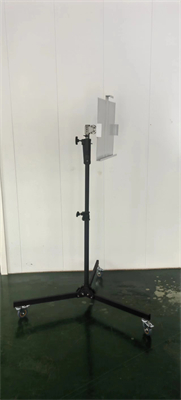
Materials are the foundation. Currently, the main materials used for the upright columns and bases of chest X-ray holders on the market are stainless steel, aluminum alloy, and cold-rolled steel. Stainless steel has excellent corrosion resistance and strength, but it is costly and heavy, and is mostly used in high-end fixed chest X-ray holders. After heat treatment, the strength of aluminum alloy is close to that of steel, but it is much lighter in weight and is suitable for occasions that require frequent movement. However, its load-bearing capacity is usually slightly lower than that of the same specification of steel. Cold-rolled steel is the most cost-effective option, with sufficient strength, but it requires surface anti-rust treatment. Some low-end products may use thin-walled steel pipes or ordinary carbon steel, which have potential problems in terms of load-bearing capacity and durability.
Structure is the framework. The cross-sectional shape of the column, the wall thickness, the arrangement of reinforcing ribs, as well as the size and weight distribution of the base all directly affect the load-bearing capacity. Common column cross-sections include square, rectangular, and circular shapes. The square and rectangular cross-sections have better bending stiffness and are more suitable for withstanding vertical pressure. The wall thickness usually ranges from three millimeters to six millimeters. If it is too thin, the stiffness will be insufficient; if it is too thick, it will increase the weight and cost. The design of the base is particularly crucial – the wider and heavier the base, the better the stability of the entire machine, and the less likely it is to tip over. Some mobile chest radiography stands have weight distribution blocks inside the base, which are set to maintain sufficient stability while ensuring the flexibility of movement.
Technology is the guarantee. Welding quality, surface treatment and assembly accuracy all affect the load-bearing capacity. If the weld is not full or has pores, it will become a stress concentration point over the long term, eventually leading to cracking. Poor surface treatment will cause the internal rust to gradually weaken the effective cross-section of the material. Insufficient bolt torque during assembly or excessive clearance between the slide and the column guide rail will also cause shaking and abnormal noise under load.
The installation method constitutes the final closed loop. The fixed chest radiography stand is connected to the ground or wall via expansion bolts, and the installation quality directly determines the actual load-bearing capacity. If the bolt hole diameter is too large, the burial depth is insufficient, or it strikes a hollow brick, even if the chest radiography stand itself is strong enough, it will not be able to perform its intended load-bearing function. Although the mobile chest radiography stand does not have the requirement for fixed installation, the locking mechanism of the bottom wheels and the braking performance are equally important – if the wheels cannot be braked, the equipment will slide when the patient leans on it, which also poses safety hazards.
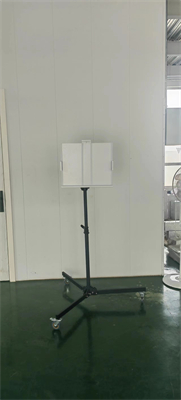
III. Selection Logic: It is not about the heavier the better; rather, it is about matching the clinical scenario.
When choosing the type, a common misconception is that “the greater the load-bearing capacity, the better”. In fact, the selection of load-bearing capacity should be in line with the actual clinical needs. If it is too large, it will lead to waste and operational inconvenience; if it is too small, it will pose safety risks.
Small clinics and community hospitals have a relatively low daily X-ray imaging volume. The majority of patients are suffering from mild illnesses or undergoing routine check-ups. The proportion of patients with larger body sizes is relatively low. A load-bearing capacity of 500 kilograms to 750 kilograms is usually sufficient. These institutions have limited space and may need mobile X-ray stands to be shared among different examination rooms. The mobile X-ray stands, with their bases equipped with wheels and counterweights, typically have a slightly lower load-bearing capacity than the fixed models of the same specifications. However, within a reasonable usage range, they are fully adequate.
Secondary hospitals and specialized hospitals have a large patient flow. There may be more patients with heavier weights in departments such as orthopedics, geriatrics, and rehabilitation. A load-bearing level of 750 kilograms to 1,000 kilograms would be more appropriate. These institutions usually have fixed radiology rooms, and it is advisable to consider using fixed chest X-ray stands to achieve better stability and a longer service life.
Large tertiary hospitals and referral centers have a wide range of patient sources, and the probability of encountering extremely large-sized individuals (such as overweight patients, athletes, and critically ill patients with monitoring equipment) is higher. A load-bearing capacity of 1,000 kilograms or more is necessary. At the same time, these institutions have extremely high requirements for the durability and all-day operation capability of equipment. It is recommended to choose products made of stainless steel with heavy-duty structures and to carry out regular maintenance and upkeep.
It is particularly important to note that the load-bearing capacity does not equal “the patient’s weight”. When the patient leans against the X-ray table, the force exerted on the equipment may be much greater than their weight – for example, the patient may suddenly exert force to support themselves due to pain, or the operator may need to apply a certain amount of pressure to position and fix the patient. Therefore, when selecting the equipment, it is recommended to add at least 50% above the estimated maximum patient weight as a safety margin.
IV. Safety: Beyond load-bearing, it also offers stability and locking functionality.
Load-bearing capacity is the foundation of safety, but it is not the entirety of safety. Even if a chest radiography stand has a qualified load-bearing capacity, if its stability design is inadequate, it may still pose risks during clinical use.
Stability primarily comes from the base. The base of a fixed chest radiography stand should be wide enough, and the larger the contact area with the ground, the stronger the anti-overturning ability. The base of a mobile chest radiography stand not only needs to be wide but also requires sufficient counterweight to prevent it from tipping over when moving or when the patient leans. Some high-end mobile chest radiography stands adopt a chassis-submerged design, lowering the center of gravity as much as possible, further enhancing stability.
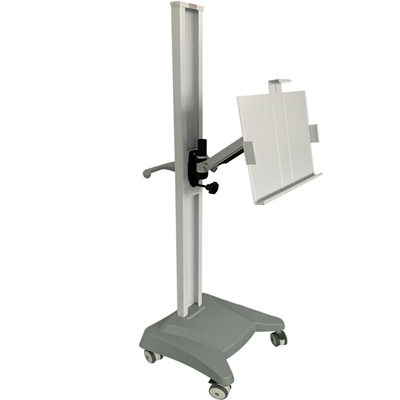
The locking mechanism is the key to safety. The holder of the chest radiography stand needs to securely fix the detector to prevent it from falling off in a vertical or inclined position. The height-adjustable locking handle should be able to reliably lock in any position and should not loosen by vibration or gravity. The casters of the mobile chest radiography stand should be equipped with reliable brakes, preferably with a “one-foot double-brake” design – simultaneously locking the rolling and turning of the wheels to ensure that the equipment remains motionless during exposure.
Anti-slip and buffering designs are equally important. The contact area between the clip and the detector should be covered with rubber or silicone pads, which not only increases friction to prevent sliding but also serves as a buffer to protect the delicate electronic components. Buffer blocks should be installed at both ends of the column guide rails to prevent the sliding frame from experiencing hard impacts at the extreme positions. The areas that patients may come into contact with should be smooth and free of burrs to avoid skin scratches.
V. The Hidden Value of After-sales Service
The load-bearing capacity is a fixed and definite parameter determined at the time of manufacture. However, the performance of the equipment during long-term use cannot be maintained without reliable after-sales service.
A chest X-ray stand is operating normally and its load-bearing capacity will not suddenly decrease. However, the following situations may occur: The expansion bolts may loosen due to vibration, resulting in a decrease in the stability of the base; The gap between the sliding frame and the column guide rail may increase due to wear, causing shaking; The thread of the locking handle may be worn, making the locking unreliable; After the surface coating is damaged, internal rusting occurs, gradually weakening the structural strength. If these problems are not dealt with in time, they will gradually erode the safety margin of the equipment.
Therefore, when making a selection, the manufacturer’s after-sales service capability should be regarded as an important consideration factor. This includes the warranty period, response time, spare parts supply, and the technical level of engineers. For scenarios with high requirements for load-bearing capacity, it is recommended to choose suppliers that can provide regular inspections and preventive maintenance services instead of waiting until problems occur and then calling for repairs.
VI. Conclusion
The load-bearing capacity of a medical X-ray chest radiography stand may seem like a simple number, but it actually involves comprehensive considerations of materials science, structural mechanics, manufacturing processes, and clinical engineering. When selecting the model, one should not blindly pursue the “larger is better” principle, nor should one choose the just-sufficient critical value just to save money. The correct approach is to assess the patient composition of the institution, the average daily workload, the usage mode of the equipment, and the expected service life. Based on this, choose the load-bearing grade and ensure the installation quality and subsequent maintenance are in place.
A good chest X-ray stand should be like the “silent guardian” of the radiology department – it remains unobtrusive, yet every exposure is accomplished under its stable support. And this stability begins with the careful consideration of the load-bearing capacity during the selection process.
